
Your social numbers look fine. Impressions are up, CTR is decent.
But when someone asks which campaign drove the most wallet activations last quarter, the room goes quiet.
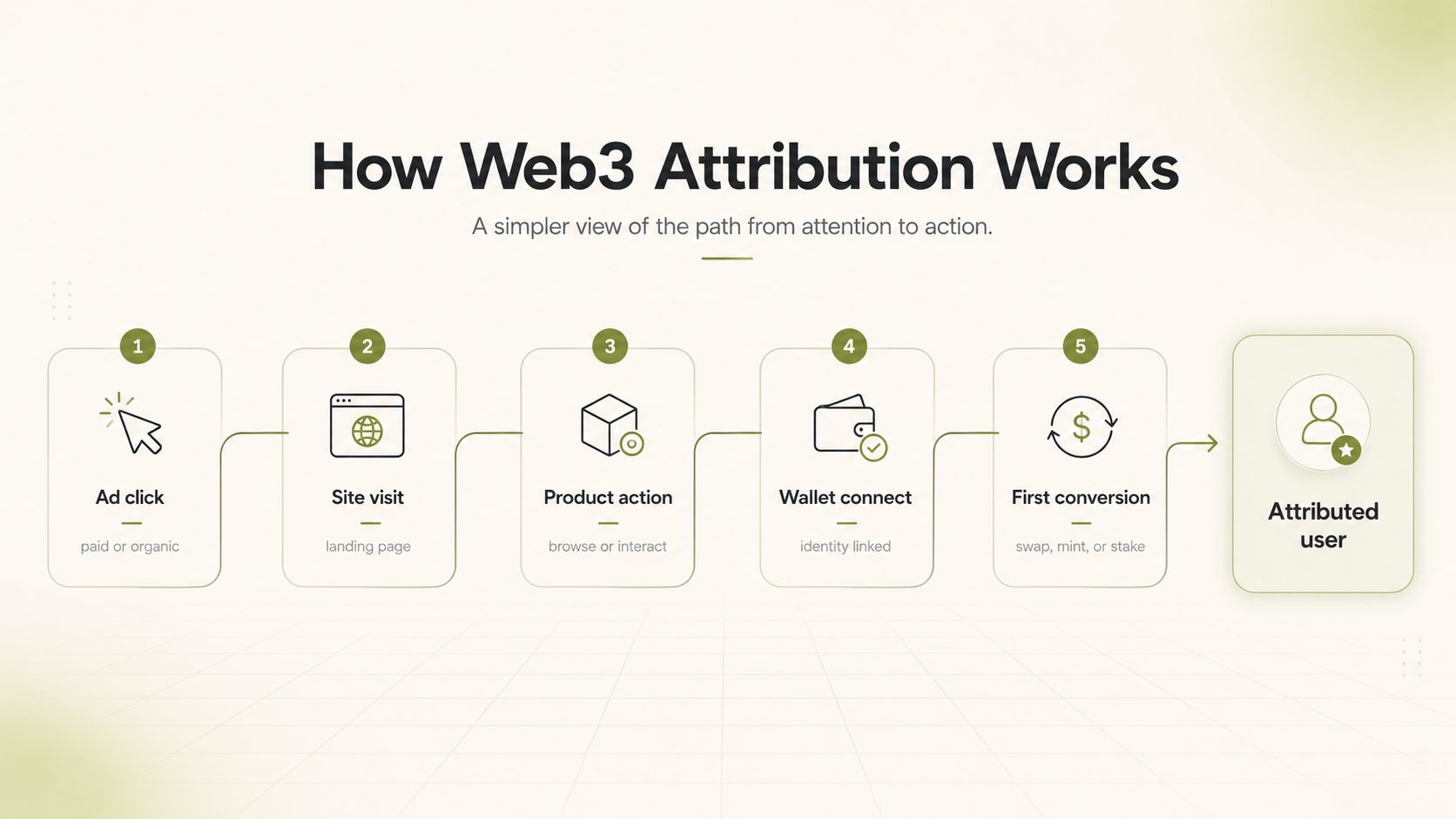
Good Web3 attribution tracks the full journey from the first touchpoint to a verified onchain conversion. The funnel usually looks like this:
- A user sees your ad or post,
- clicks through to your site,
- takes a product action like signing up or exploring a feature,
- connects their wallet,
- completes a first conversion such as a swap, mint, or deposit,
- and gets recorded as an attributed user, tied back to the original campaign source.
Most teams only see the click. But the wallet connect, the transaction, and the revenue signal behind it stay invisible.
That’s the gap onchain attribution tools are built to close. Here are seven signs your team needs an onchain attribution stack now:
1. You Report Clicks but Not Conversions
If your reporting stops at the link click and never wallet connect, swap, or mint, you’re optimizing for the wrong signal. UTM-to-wallet attribution fixes this by tagging outbound links, binding that campaign data to a wallet when the user connects, and attributing later transactions back to the original acquisition source.
2. Your Social-to-Onchain Conversion Tracking Is Nonexistent
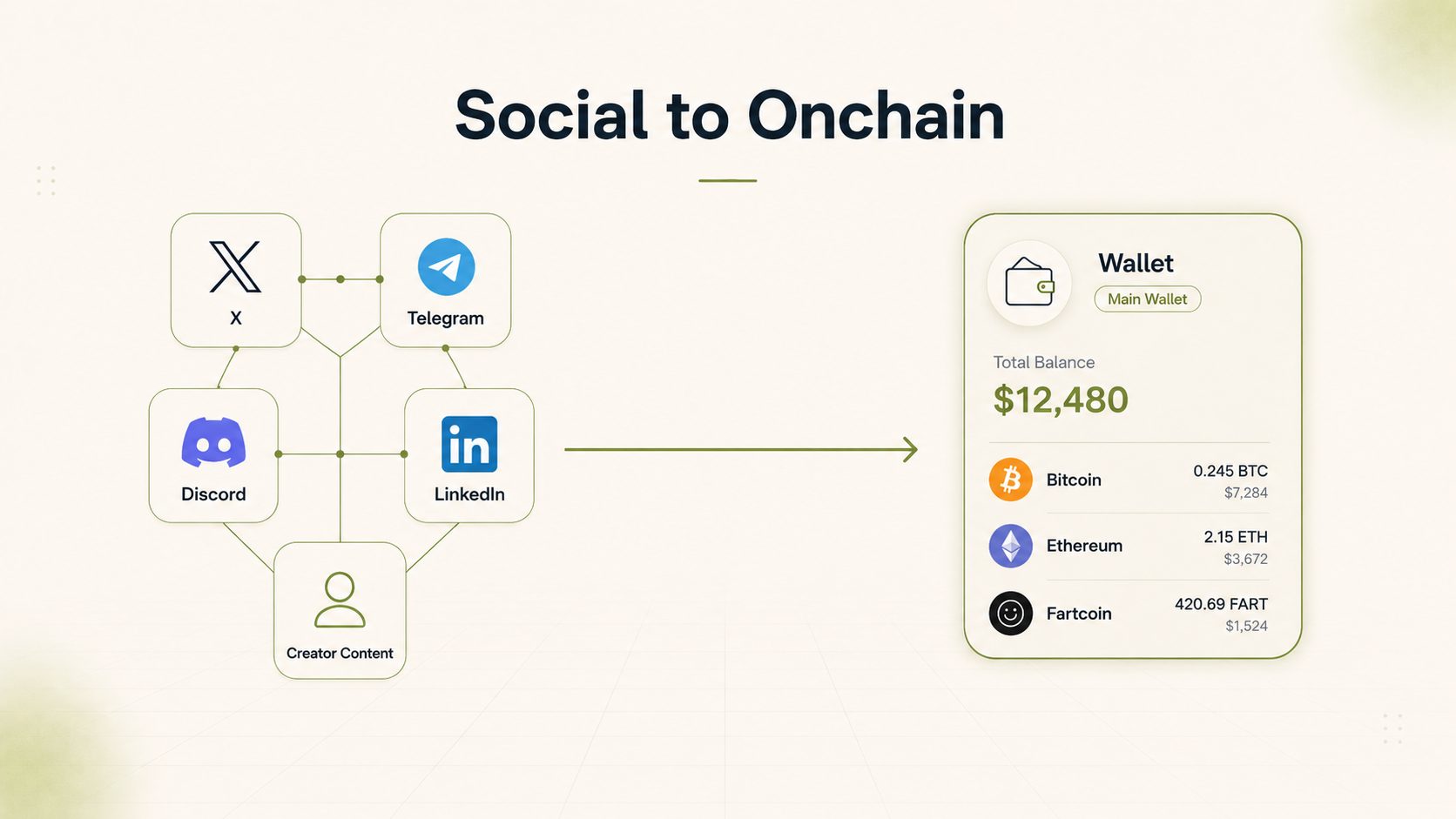
You’re running content across X, Discord, and Telegram, but you have no idea which platform drives actual onchain activity. Social-to-onchain conversion tracking maps those channel-level touchpoints to wallet addresses using public blockchain data, replacing cookie-based identity with persistent onchain records that don’t expire or get blocked by browsers.
3. You Can’t Segment Audiences by Wallet Behavior
You know your follower count, but you don’t know how many of those followers hold your token, have interacted with your contract, or qualify as high-value wallets. Wallet-based audience segmentation lets you build cohorts from onchain behavior, which makes retargeting and community campaigns far more precise.
4. You’re Using One Attribution Model for Everything
First-touch, last-touch, and multi-touch models each tell a different story. Teams running testnet-to-mainnet campaigns need multi-touch with a defined lookback window, typically 14 or 30 days, to capture the full conversion arc. Applying a single model across every campaign type distorts your read on what’s working.
|
Attribution Model |
Best Use Case | Lookback Window |
|---|---|---|
|
First-touch |
Brand awareness campaigns | 30 days |
| Last-touch | Direct conversion pushes |
7 days |
| Multi-touch | Testnet to mainnet GTM |
14–30 days |
5. Your Analytics Stack Is One Tool Doing Five Jobs
No single platform covers everything. Formo and Safary handle marketing attribution. Addressable connects social audiences to wallet data. Dune and Nansen handle wallet labeling and onchain analytics. Forcing one tool to cover all of this produces incomplete data and bad decisions.
6. You Can’t Reconstruct a Conversion Journey
Attribution in Web3 runs backward from the transaction. The system starts with a wallet action and rebuilds the preceding journey from stored touchpoints. If your stack can’t do that reconstruction, you’re guessing at causation.
7. Your Reporting Doesn’t Inform the Next Campaign
Reports should change what you do next. If last month’s numbers don’t tell you which content format, platform, or narrative drove the most onchain conversions, the data isn’t actionable.

8. Start Building Your Attribution Stack
If three or more of these signs describe your current setup, the gap between your content output and your conversion data is costing you. Multi-platform content execution and performance tracking only compound in value when the onchain layer is connected. Map your current stack against these gaps, pick the tools that address your biggest blind spots, and start attributing from the wallet back.
FAQ
What are onchain attribution tools for Web3?
Onchain attribution tools link offchain marketing touchpoints, like ad clicks, UTM tags, and social posts, to wallet addresses. They then connect those wallets to onchain events such as swaps, mints, deposits, or contract calls, giving marketing teams a complete picture of which campaigns drive real conversions.
How does UTM-to-wallet attribution work?
You tag outbound links with UTM parameters as usual. When a user clicks and connects their wallet, the platform binds the stored campaign data to that wallet address. Any subsequent onchain transaction from that wallet gets attributed back to the original source campaign.
Which tools should a lean Web3 team start with?
It depends on your biggest gap. Formo and Safary are strong starting points for marketing attribution. Addressable is useful for connecting social audiences to wallet data. Dune and Nansen add depth for onchain analytics and wallet labeling. Most teams need at least two of these working together.
Do I need a large team to run onchain attribution?
No. A single operator managing web3 social media management and multi-platform content execution can run attribution reporting if the stack is set up correctly. The key is having the right tools connected from day one, not adding headcount to compensate for missing infrastructure.